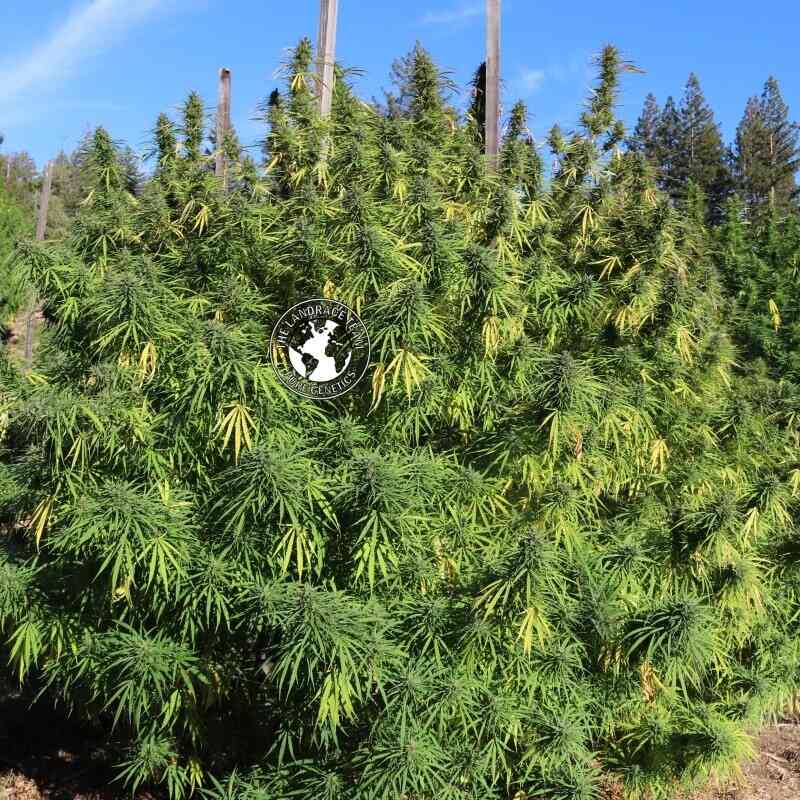
SINALOA

Strain details

Genetics Sinaloa (Mexican domesticate)
Latitude: 25 N
Altitude: 1800 m.a.s.l
Vegetative: 12 - 14 weeks
Flowering: 12-13 weeks
Height: 150 to 180 cm (some up to 230 cm)
Aromas: Grapefruit, tangerine, pepper, wood, mint, eucalyptus, carrot, fruity, spicy
Effects: potent, psychoactive, energetic, euphoric, clear, meditative
Phenotypes: 4
Characteristics: fast
Grow type: outdoor, greenhouse, indoor

Sinaloa is a beautiful , vigorous and resinous sativa with a short-medium flowering and an unmistakable organoleptic profile, aromas of grapefruit, tangerines, carrots, mint, Mexican tea. Very bright, shiny meditative effects without traces of heaviness and/or drowsiness. The more marked smell is grapefruit, a very nice smell and aroma for those who use it recreationally. The taste is very fragrant and long lasting in the throat. This is a high quality smoke, very potent . You cannot expect more from this legendary and ancient sativa. A recommended plant, perfect for the breeding of new lines due to its earliness and quality of flowering and high resistance to pests and high levels of relative humidity.

Sinaloa is one of our most loved ones for its speed, its vegetative stage goes from 12 to 14 weeks maximum, very quick for such a high quality sativa. During the vegetative stage plants take on tower structures and conical shapes,  in the 4 variations in its most marked phenotypes we have noticed great symmetry for all.  Very thin and serrated medium large olive green leaves of 7 and 9 very serrated leaflets, Strong reddish and long green petioles with stems of a medium radius, very resistant with aromas of citrus and a subtle smell of mint and eucalyptus.

The maximum height is 150 and 180 cm in most of its phenotypes. Few exceed 230 cm. short-medium internodal spaces, foliage of an average amount that reveals its stems, whereas in  others the foliage is so abundant that you can’t see the  main stems or the branches, they are extremely full of leaves that start to fall from the moment the plant begins to flower.

The flowering stage goes from 12 to 13 weeks. It’s fascinating to receive this  quality of electric sativa flowers in such a short time. Although its flowers are not so productive, it has a large amount of flower clusters through its branches and its main stem, which results in an abundant harvest as well.
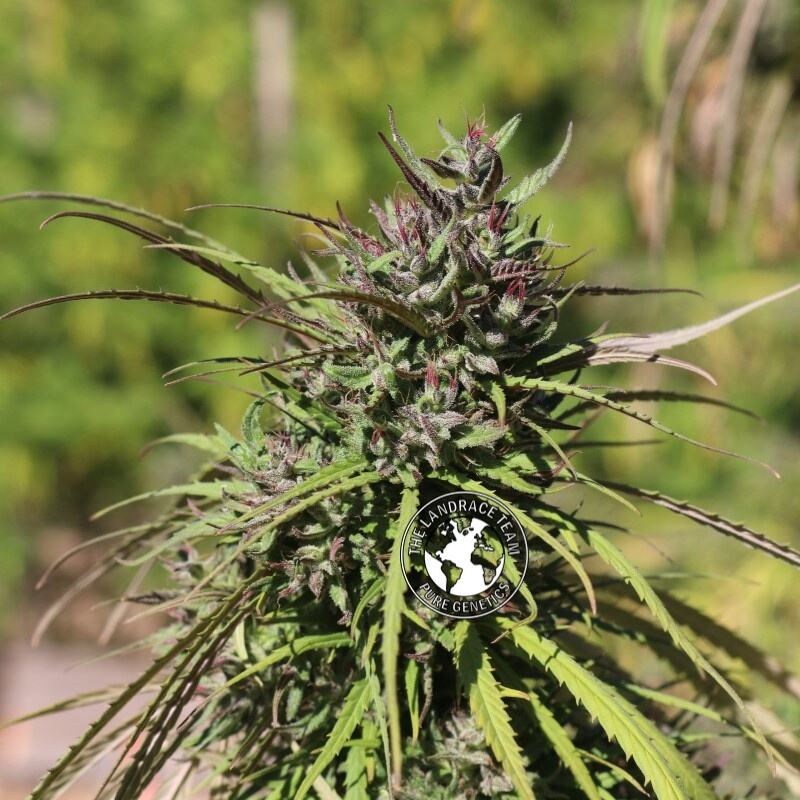
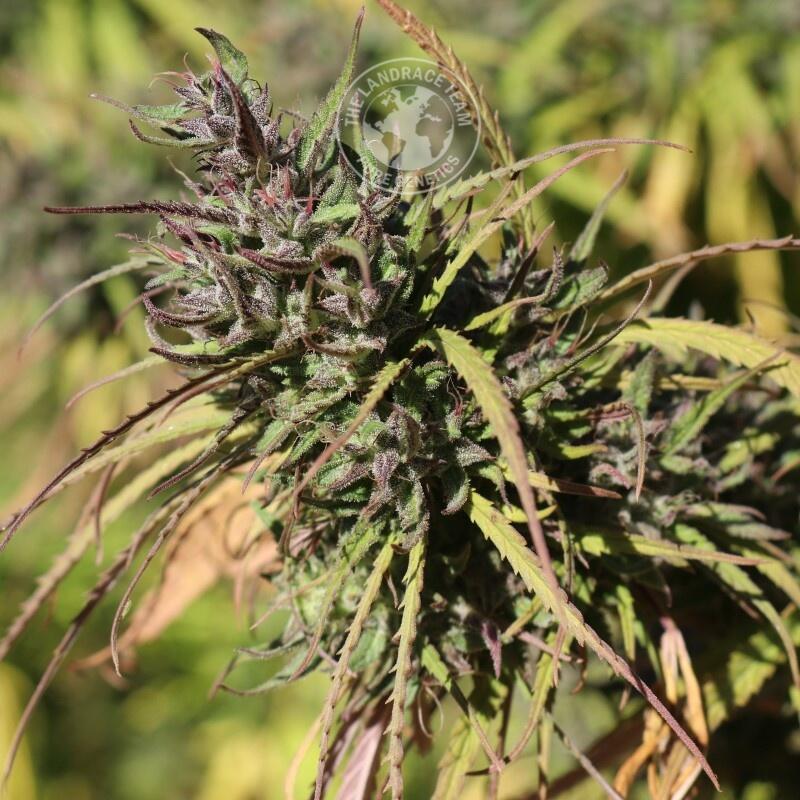
When ripe, some turn brown coffee, red, orange  and some phenos turn liliac.

The calyxes are very full of glandular pointy trichomes with a medium abundance of long stigmas that end in dark amber. Aromas of grapefruit, citrus, mandarines, wet wood and touches of mint and eucalyptus, carrot, spices, pepper and fruity too. Very fragrant flavor to the palate. For people who use it recreationally, they will find a flavor bomb as well as the so much sought after effect from this Mexican sativa with high potency and length of duration and of great quality. The plants from Sinaloa are true old school Mexican jewels. Potent, psychoactive, energetic, clear mind and with overall euphoric effects and meditative too.

Origin and History of Sinaloa

The state of Sinaloa occupies a unique position in the history of Mexican cannabis. Located on the Pacific coast and connected to the mountainous regions of the Sierra Madre Occidental, it became one of the most important areas for cannabis cultivation in Mexico during the twentieth century. The combination of altitude, long growing seasons, intense sunlight and seasonal humidity allowed farmers to develop and maintain populations of cannabis that adapted perfectly to local conditions over many generations.

Unlike modern commercial hybrids that are selected for uniformity and intensive indoor cultivation, traditional Sinaloa cannabis evolved in open agricultural environments where vigor, resistance and adaptation were essential traits. Plants that could tolerate periods of heat, fluctuations in humidity, seasonal pests and the demands of outdoor cultivation were naturally favored. Through decades of farmer selection, these populations gradually developed their own identity, expressing characteristics that became associated with the cannabis of northwestern Mexico.

The Sinaloa preserved by TLT Seeds represents this old agricultural heritage. It belongs to a generation of Mexican domesticates that were cultivated before the widespread introduction of modern hybrid genetics. While many traditional Mexican populations have disappeared, become diluted through hybridization, or simply been abandoned as cultivation practices changed, some isolated lines managed to survive through the dedication of growers who recognized their value.

One of the most remarkable aspects of Sinaloa is the balance it achieves between quality and practicality. Many tropical and equatorial sativas require exceptionally long flowering periods, making them difficult to cultivate in temperate climates. Sinaloa expresses the energetic and psychoactive character that made Mexican cannabis famous while maintaining a comparatively fast life cycle. This combination of speed, potency and adaptation is one of the reasons why it has remained highly appreciated by growers searching for authentic old-school genetics.

The aromatic profile also reflects its unique heritage. The intense grapefruit, citrus and spice aromas found in many plants are unlike the sweet dessert profiles that dominate modern breeding. Instead, Sinaloa carries a distinctly traditional character, complex and sometimes challenging, yet immediately recognizable to those familiar with older cannabis varieties from Mexico.

Today, genuine Mexican landraces and domesticates are becoming increasingly difficult to find. Modern hybridization, changing agricultural practices and the loss of traditional seed-saving culture have placed many historic populations at risk. Preserving lines such as Sinaloa is not only important for cannabis enthusiasts and breeders, but also for maintaining genetic diversity that may prove valuable for future generations.

For collectors, breeders and growers interested in experiencing a chapter of cannabis history, Sinaloa offers a rare opportunity to cultivate a plant that still expresses many of the characteristics that made Mexican cannabis legendary throughout the Americas.

Growing Sinaloa From Seed

Growing Sinaloa is a rewarding experience for cultivators who appreciate observing a plant reveal its character gradually rather than all at once. From the first weeks of growth it becomes clear that this is not a modern compact hybrid selected exclusively for indoor production. Sinaloa grows with purpose, displaying the elegance, vigor and adaptability that made traditional Mexican cannabis so respected among generations of growers.

Seedlings establish quickly and usually develop a strong central stem early in life. As vegetative growth progresses, plants begin to show excellent structural symmetry. Most individuals produce a naturally balanced architecture with strong lateral branching and a clear apical dominance. Even before flowering begins, many plants already release subtle aromas when stems and petioles are rubbed, often revealing hints of citrus peel, herbs and fresh vegetation.

One of the most interesting aspects of Sinaloa is the relationship between its vigor and its manageable size. While many growers associate old sativas with uncontrollable vertical growth, Sinaloa remains relatively practical and predictable. Most plants stay within a moderate height range while still expressing the open structure and elegance typical of traditional Mexican genetics.

As flowering approaches, the plant undergoes a visible transformation. New growth becomes increasingly aromatic and resin production begins surprisingly early for a cultivar of this type. During this period growers often notice the emergence of distinct phenotypic expressions. Some individuals lean toward bright grapefruit and citrus aromas, while others reveal deeper notes of wood, spice, mint, eucalyptus or sweet fruits. This diversity is one of the most enjoyable aspects of cultivating authentic domesticated populations.

Throughout flowering, Sinaloa continues to build clusters of flowers along the branches rather than concentrating all production exclusively on terminal colas. This characteristic contributes to a harvest that often exceeds first impressions. While individual flowers may appear less dense than those of modern commercial hybrids, the overall distribution of floral material across the plant can result in very satisfying yields.

Another quality frequently appreciated by growers is the plant’s resilience. Sinaloa has demonstrated an ability to perform well under varying environmental conditions and has shown a notable tolerance to periods of elevated humidity compared to many other narrow-leaf sativa populations. Good airflow and basic cultivation practices remain important, but the plant generally displays the robustness expected from a line shaped through generations of outdoor cultivation.

Patience during the final weeks is often rewarded. As maturity approaches, aromas become more complex, resin glands swell and colors may shift toward shades of amber, copper, red or even soft lilac in selected individuals. These final changes contribute significantly to the depth of the finished flowers and should not be rushed.

For growers interested in preservation, breeding or simply experiencing a genuine piece of cannabis history, Sinaloa offers a cultivation journey that is every bit as memorable as the final product. Its combination of vigor, manageable flowering time, distinctive aromas and clear psychoactive character continues to demonstrate why traditional Mexican cannabis remains admired by enthusiasts around the world.

Why Sinaloa Is Different From Modern Hybrids

For many growers, the first encounter with Sinaloa can be surprisingly revealing. Not because it is stronger, bigger or more productive than modern hybrids, but because it often feels as though it belongs to a completely different chapter of cannabis history.

Modern cannabis breeding has achieved remarkable results. Faster flowering times, increased resin production, dense flowers and highly specialized terpene profiles have become common objectives. Over time, however, the pursuit of these traits has also led to a certain degree of convergence. Many contemporary varieties, despite their different names and origins, share portions of the same genetic ancestry and often express familiar growth patterns, aromas and effects.

Sinaloa follows a different path.

Rather than being the result of multiple generations of intensive hybridization, Sinaloa represents a population shaped primarily by adaptation, cultivation and selection over time. It comes from a period when cannabis was not bred to satisfy market trends, social media aesthetics or commercial expectations. The plant had to survive, reproduce and perform under real agricultural conditions, season after season.

This difference becomes apparent throughout the entire life cycle. The structure of the plant, the way it branches, the aromas released during flowering and the final psychoactive experience often feel less engineered and more expressive. There is a sense of individuality that many growers immediately recognize. Plants may share a common identity while still revealing subtle variations that make each cultivation cycle interesting.

The effect is perhaps where the distinction becomes most noticeable.

Many modern hybrids are selected around potency alone, often producing experiences that can feel physically heavy, mentally repetitive or short-lived, flat, dull, and uninteresting Sinaloa belongs to an older tradition of cannabis where intensity was only one part of the experience. Clarity, curiosity, laughter, sensory enhancement, introspection and a feeling of engagement with one’s surroundings were equally important aspects of the journey.

For some growers and collectors, this is precisely what makes old Mexican cannabis so memorable. It offers a different relationship with the plant. Rather than overwhelming the user, it invites participation. Music sounds richer, conversations become more animated, ideas seem to connect more freely and ordinary moments can take on an unusual sense of significance.

From a breeding perspective, Sinaloa also represents something increasingly valuable: diversity. As modern breeding continues to draw from a relatively limited pool of elite genetics, traditional populations provide access to characteristics that are becoming harder to find. Vigour, adaptability, unique terpene expressions, resilience and uncommon psychoactive profiles remain important resources for future breeding projects.

Cultivating Sinaloa is therefore not simply about growing another cannabis variety. It is about experiencing a living genetic legacy that developed outside the framework of modern commercial breeding. It offers a glimpse into a time when regional cannabis populations possessed strong local identities and when the character of a plant was shaped as much by geography and culture as by deliberate human selection.

For growers searching for something genuinely different rather than simply stronger, sweeter or faster, Sinaloa continues to demonstrate why traditional Mexican cannabis remains respected decades after many believed these old populations had disappeared.

What Type of Cannabis Is Sinaloa?

Sinaloa is a traditional Mexican domesticate originating from the north-western region of Mexico that shares its name. Unlike modern poly-hybrids created through multiple generations of intensive breeding, Sinaloa belongs to an older agricultural tradition where plants were selected and maintained by growers over many years under local environmental conditions. The result is a vigorous narrow-leaf sativa with a relatively manageable flowering time (12-13 weeks), excellent resistance to humidity and a distinctive aromatic profile combining grapefruit, citrus, spices, mint and eucalyptus. Sinaloa is particularly valued by collectors, breeders and growers interested in preserving historic cannabis genetics and experiencing the type of psychoactive effects that made Mexican cannabis famous throughout previous decades.

How Long Does Sinaloa Take to Flower?

Most Sinaloa plants complete flowering in approximately 12 to 13 weeks. While this may appear lengthy when compared with many modern commercial hybrids, it is actually considered relatively fast for a high-quality traditional sativa. One of the reasons Sinaloa has remained popular among experienced growers is its ability to produce potent and characterful flowers without requiring the exceptionally long flowering periods often associated with tropical cannabis varieties. During the final weeks of flowering the aromas become noticeably more complex, resin production increases and many plants begin displaying attractive colours ranging from amber and copper tones to shades of red, orange and occasionally lilac.

Is Sinaloa Suitable for Breeding Projects?

Yes. Sinaloa is one of the most interesting Mexican populations available for breeding work. Growers and breeders often appreciate its combination of vigour, adaptability, relatively fast flowering time and distinctive aromatic profile. The line is capable of transmitting citrus, spice and herbal characteristics while also contributing strong psychoactive qualities and excellent structural traits. Because genuine Mexican domesticates have become increasingly rare, Sinaloa also represents an important source of genetic diversity that can be valuable when working with modern breeding projects. Whether used to preserve traditional traits or introduce new expressions into contemporary lines, Sinaloa offers considerable potential for selection and hybridisation.

What Makes Mexican Cannabis Different From Other Landraces?

Mexican cannabis has a character of its own. While every region and population is different, many traditional Mexican varieties share a combination of traits that experienced growers quickly learn to recognise. Vigour, adaptability, strong branching and highly expressive psychoactive effects are often part of the package, but what truly sets them apart is the overall experience they provide.

Many growers describe old Mexican cannabis as lively, engaging and full of personality. Rather than producing a heavy or overly sedative effect, these plants are often associated with clarity, laughter, creativity, curiosity, giggles, and a heightened appreciation of music, conversation and the surrounding environment. It is a style of cannabis that many people remember fondly from previous decades and one that remains difficult to find in modern commercial breeding.

Another distinguishing feature is their aromatic diversity. Traditional Mexican populations can express a remarkable range of scents, from bright citrus and tropical fruits to herbal, spicy, woody and sometimes almost incense-like notes. These profiles often feel less predictable than those found in many contemporary hybrids and can vary considerably from one plant to another.

For breeders and preservationists, Mexican cannabis also represents an important reservoir of genetic diversity. These populations developed over many generations under local environmental conditions and continue to offer unique traits that are increasingly uncommon in the modern cannabis gene pool. This combination of history, diversity and unmistakable character is one of the reasons why Mexican cannabis continues to fascinate growers around the world.

What Aromas Are Typical of Sinaloa?

Sinaloa is one of those varieties that people often remember because of its smell. Open a jar of well-cured flowers and the first thing that usually jumps out is a bright grapefruit aroma, followed by notes of tangerine, citrus peel and a fresh herbs that feels unmistakably old school.

As with many traditional populations, not every plant smells exactly the same. Some lean heavily towards citrus, while others reveal hints of mint, eucalyptus, spices, and a carrot note that occasionally appears in this line. This variation is part of what makes growing authentic Mexican genetics, and landrace in general, so enjoyable. There is always something interesting to discover from one plant to the next.

One thing many growers notice is how much the aroma develops during curing. What starts as a sharp citrus fragrance can become richer, deeper and more complex after a few weeks in the jar. It is the sort of cannabis that keeps inviting you back for another smell just to figure out what else is hiding in there.

For us, the grapefruit character remains the signature of Sinaloa. It is bright, memorable and surprisingly uncommon in modern cannabis, giving this old Mexican line a personality that is very much its own.

Related Mexican Genetics

Mexico has produced an extraordinary range of cannabis populations, each shaped by its own environment, cultivation history and regional traditions. While Sinaloa stands out for its balance of vigour, speed and bright citrus character, growers interested in exploring traditional Mexican cannabis may also wish to discover these preserved Mexican genetics from the TLT Seeds collection.


Acapulco Gold – One of the most legendary names in cannabis history, originating from Mexico’s Pacific coast.

Jalisco – A classic Mexican population appreciated for its vigour, adaptability and expressive effects.

La Lina – A remarkable Mexican line valued by collectors and growers seeking authentic old-school genetics.

Mexican Death Sativa – A powerful and highly distinctive Mexican sativa preserved for its unique character and breeding potential.

Mexican Red Hair – A traditional Mexican sativa appreciated for its uplifting effects, red stigmas and unmistakable old-school look

Oaxaca Gold – Traditional highland Mexican cannabis with a rich history and distinctive regional character.


Ask about this seeds

    I agree with the website Privacy Policy

    4 thoughts on “SINALOA”

    1. WOW! Now that this Sinaloa has had some time to cure… that distinct spicy smell is really popping!
      I’m from the Midwest, and this is what I grew up on in the 80’s-90’s, and had so much fun laughing and being silly with friends… and now have been reunited with this nostalgic variety. This makes me so happy! Yay!
      Sinaloa is wild, this hits behind the eyes on the first exhale…. vibration wave sensation behind your eyes… trippy!
      After growing a number of old school Mexican varieties this season, like Acapulco Gold, Oaxaca Gold, Mexican Red Hair, Jalisco, La Lina) and now sampling, I have concluded that the old Mexican cannabis varieties are some of the best in the world! They are fun, creative, energizing, psychedelic, and giggly – so stoked to have found this. The Mexican varieties really are in a league of their own!

    2. For many whose early stoner days were in the 80’s-90’s, this is the Mexican variety that was smuggled into the USA as Mexi-Brick Weed.
      Turns out the genetics are amazing, and the effects are super psychedelic, silly, giggly, and fun. (Cheech & Chong vibes). Mexi-Brick Weed got a bad rap due to the smuggling, it got beat up and dried out during the smuggling process, but the actual cannabis genetics are amazing. There are multiple discussions going on these days about the older weed being better than the modern poly-hybrid weed. My opinion on this is not which is BETTER, but the old landrace and heirloom weed of the 60’s-90’s was DIFFERENT compared to most of today’s modern poly-hybrids. If you enjoy laughing, feeling creative, feeling inspired, smiling, dancing, and experiencing an amplified psychedelic version of life for a few hours is enjoyable, then old school Mexican varieties could be your thing.
    3. IN A LEAGUE OF ITS OWN

      The Sinaloa delivers BIG TIME in the flavour and psychedelic effects. The nose is spicey, almost like hot Chinese mustard that tingles and burns – similar to Mezcal fumes…. the flavour coats your palette with a peppery sensation, and a curious wasabi vapor burn on the exhale, followed by an immediate expansion behind the eyes and up through your scalp… instant waves of cannabis happiness. The old Mexican landrace varieties have a special flavour and sensation profile that is totally unique…. fiery, fierce, and powerful… with bit of old Cheech and Chong silly vibes to keep it fun. The Sinaloa is a timeless classic that remains AWESOME regardless of trends.

    4. Sinaloa is a fierce yet delicate spirit plant. A few weeks ago it had an elegant fruity scent, that has now turned to scorpion venom (I don’t actually know what scorpion venom smells like). It almost smells like a fine mescal, with fiery fumes that burn your nose. She’s intense! We’re going to let her go a few more days to see how wild she gets! Absolutely mesmerized by this elegant fiery spirit plant. Hoping this will remind me of the good old days of squinty red eyes, cotton mouth, and laughing hysterically for no reason back when weed was psychedelic and hilarious 🙂

    Comments are closed.